What is bee pollen?
Bee pollen is made of the tiny pollen grains found in flowers. A forager bee visiting a flower gets covered in pollen, moistens it with a little nectar and saliva, and rolls it into small pellets that she carries in the "baskets" on her hind legs. In the hive, pollen is used mainly to feed the larvae.
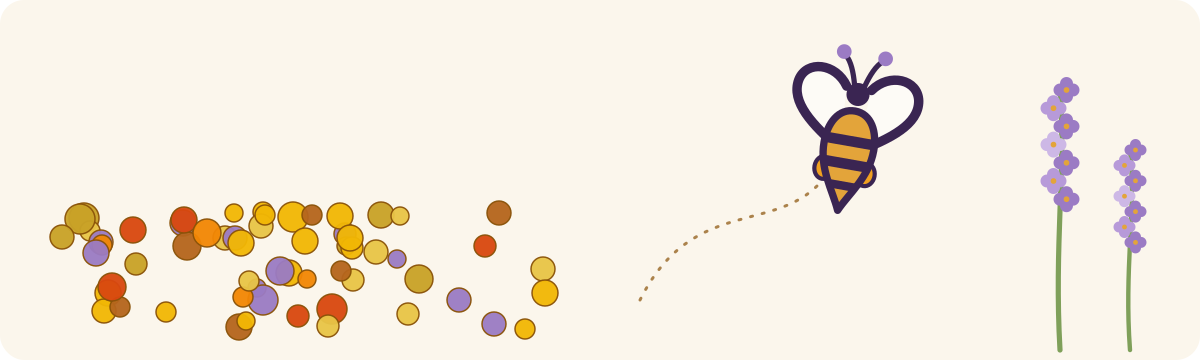
To collect pollen, the beekeeper places a fine mesh at the hive entrance. As the bees pass through it, some of the pellets drop into a small tray, while most continue into the hive. The colour of each pellet shows which flower it came from: yellow, orange, brown, red and even purple.
What is it made of?
Bee pollen contains proteins, carbohydrates, a little fat, vitamins and minerals. Its composition varies a lot with the region, the season and the plants the bees visited, so no two jars are the same. Inside the hive, bees also pack pollen into cells with a little honey, where it ferments naturally and becomes "bee bread".
How is it traditionally used?
Traditionally the pellets are eaten as they are, sprinkled on yoghurt or cereal, or mixed into honey and smoothies. It is important to start with a tiny amount, even just a few pellets, and increase slowly only if your body responds well. In our first conversation we are happy to look at whether it suits you and in what amount. Ask us about the bee products available at the clinic.
Frequently asked questions
What does bee pollen taste like?
Sweetish and floral, sometimes with a slightly bitter note. The taste depends on the flowers, so every jar is a little different.
How should bee pollen be stored?
In a tightly closed container, in the fridge for short periods or in the freezer for longer. Keep it away from moisture, as it spoils easily.
Sensitive to bees or bee products? Talk to us before using them.